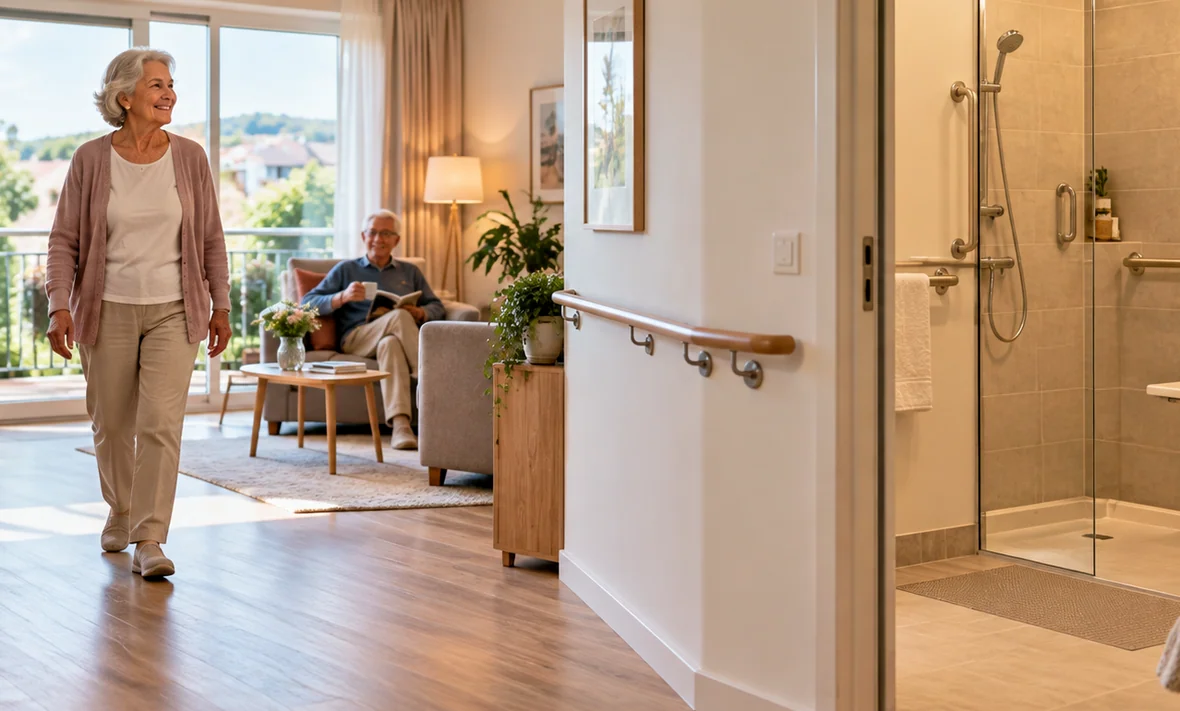
The landscape of senior housing in Croatia
The main residential form is the dom za starije osobe, a home for older people that combines housing, meals, personal care and, in many cases, a nursing ward. Homes founded by counties or the City of Zagreb sit alongside private homes and smaller family-type facilities.
Independent retirees generally rent or buy apartments and stone houses along the coast or in Zagreb. Assisted living as a separate category is less developed than in Western Europe, but some private homes offer apartments with services that bridge independent living and full care.
Public, private and family-type providers
Public homes are in demand and often keep waiting lists with locally set priorities. Private homes fill the gap at higher prices, and family homes care for a few residents in a domestic setting. All must be authorised by the social welfare ministry.
Before choosing, families should ask whether the home holds a valid licence, how many nurses work each shift and how medical visits are organised. Homes near Opatija, Split and Zagreb increasingly receive foreign enquiries and sometimes have staff speaking English, German or Italian.
Residence rights for retirees
Citizens of EU and EEA countries can live in Croatia and register their residence with the police, showing health coverage and sufficient means. Non-EU retirees need a reason for temporary stay recognised by Croatian law, and may need a long-stay D visa beforehand.
British nationals who arrived after Brexit are treated as third-country nationals. Requirements on income, accommodation and insurance are checked by the police administration of the place of residence, so an address and a lease are typically required before the application is accepted.
Health insurance and medical care
The Croatian Health Insurance Fund, HZZO, manages compulsory public cover. EU pensioners can register an S1 form to access it, while other residents usually contribute directly or hold private insurance. Supplementary insurance is widely purchased to cover co-payments on treatment and medicines.
University hospitals in Zagreb, Split, Rijeka and Osijek provide specialist care. On islands and in small coastal villages, access can be limited, especially in winter when ferry schedules shrink. Proximity to a general hospital is a sensible criterion when choosing a home.
Costs and housing budgets
Living costs are below Western European averages, but tourism has pushed up property prices and summer rents along the coast. Off-season long-term leases are easier to negotiate. Private homes for older people charge monthly fees depending on room type and care category.
Non-EU buyers of property may face approval or reciprocity requirements, while EU citizens buy on the same basis as Croatians. Notary costs, transfer tax and checks on the land registry should all be factored in before committing to a purchase.
Popular regions
- Istria: Italian influence, gentle hills, good roads and links with Slovenia.
- Opatija and Kvarner: historic spa resort with a tradition of health tourism.
- Split and central Dalmatia: hospital, airport and lively town life.
- Zagreb: continental climate, full services and the best medical choice.
Croatia's population is ageing quickly, and many younger people have moved abroad for work. This puts pressure on care staff numbers, so asking a home how it recruits and retains carers gives useful insight into the stability of its service.
Comparing options
| Option | Best for | Who runs it | What to ask |
|---|---|---|---|
| Coastal apartment | Independent retirees | Private owner | Winter services, stairs, parking |
| County home for older people | Residents needing care | County or city | Waiting list, priority rules |
| Private home | Faster admission, more comfort | Private company | Licence, nursing staff, fees |
| Family home | Small, homely setting | Individual provider | Number of residents, training |
Private home care is available in larger towns through agencies and nurses working independently. Community nursing provided through the public system can support residents after hospital discharge, and a family doctor referral is generally the starting point for these services.
How to plan the move
- Spend a winter on the coast to test life outside the tourist season.
- Confirm your residence route with the local police administration.
- Register health coverage with HZZO or arrange private insurance.
- Rent first and verify land registry records before buying any property.
- Visit homes early and ask to join waiting lists in good time.
Pitfalls and contract checks
Care contracts should state the room, care category, monthly fee and conditions for change if health declines. Ask what happens during hospital stays, whether fees continue, and how much notice is required on either side to end the agreement.
- Buying property with unresolved ownership or registry discrepancies.
- Underestimating isolation on islands outside summer.
- Assuming your foreign state pension will be uprated; check whether it rises while living in Croatia.
- Ignoring the language barrier in rural homes.
Can foreigners enter a public home in Croatia?
Legal residents can apply, but admission depends on availability and local priority rules, which often favour long-standing local residents in need. Foreign retirees therefore frequently choose private homes, which admit residents more quickly when places are free.
Is Croatian needed in a care home?
Day-to-day communication in most homes is in Croatian. Staff in tourist regions may speak English, German or Italian, but this is not guaranteed. Learning key phrases and preparing translated medical information is strongly recommended for anyone entering residential care.
What is the climate like for retirees?
The coast has a Mediterranean climate with hot, dry summers and mild, sometimes windy winters. The interior and Zagreb experience colder winters with snow. Many retirees divide the year, enjoying spring and autumn on the coast.
Does an EU pensioner pay Croatian health contributions?
Not if the pension country issues an S1 form, which transfers responsibility for healthcare costs to that country. The pensioner registers the form with HZZO and receives public cover, often adding supplementary insurance for co-payments.
Sources and organisations
- Ministère croate de l'Intérieur – Séjour temporaire des ressortissants de pays tiers — Croatian Interior Ministry information on temporary stay for non-EU nationals, explaining purposes, documents and where to apply.
- Ministère croate des Affaires étrangères – Visa de long séjour (D) — Official Croatian guidance on applying for a long-stay D visa and the supporting documents expected from applicants.