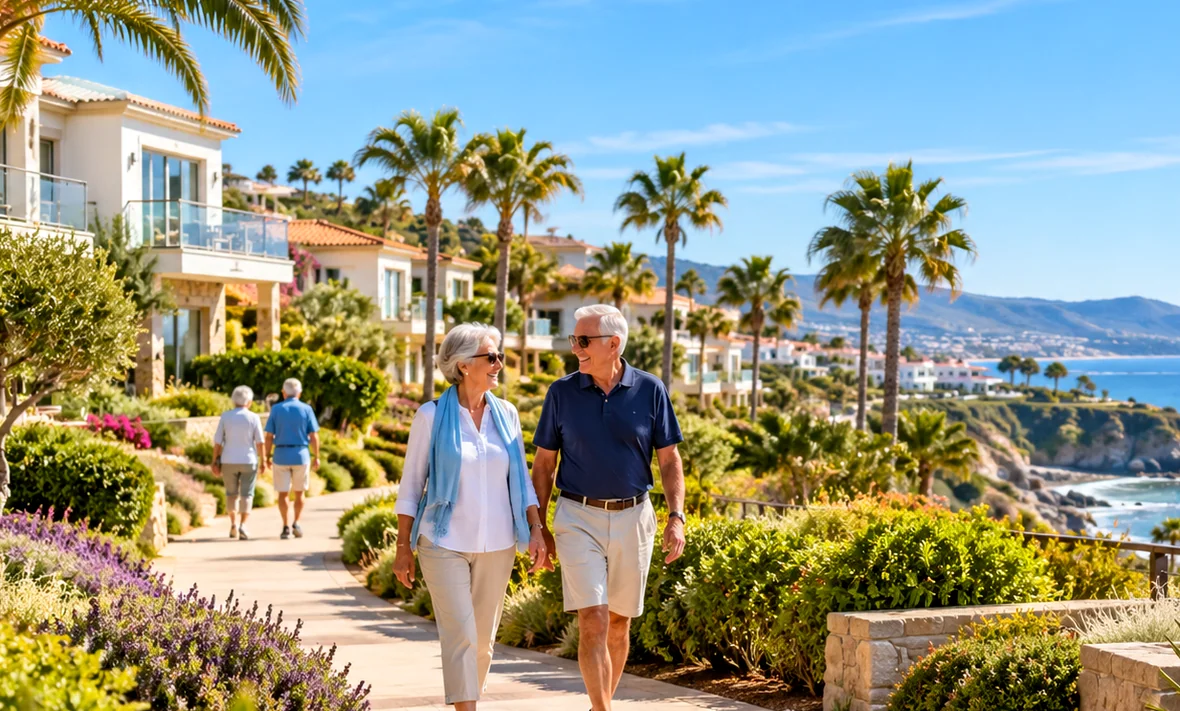
Housing choices for older people on the Maltese islands
Most foreign retirees begin in an ordinary rented or purchased apartment, often in a block with a lift, and only later consider supported settings. Seafront flats in Sliema, St Julian's or Bugibba are popular, while Gozo attracts people seeking a slower village rhythm.
When independence declines, the main alternatives are state-run long-term care facilities, church-run homes, privately operated residences with nursing wings, and home-based support delivered by public community services. Purpose-built retirement villages on the British or American model remain rare, so expectations should be adjusted accordingly.
| Option | Typical operator | Suited to |
|---|---|---|
| Private apartment with home help | Owner or landlord, with community services | Independent retirees |
| Private residence with care floors | Private companies | People wanting services and later nursing |
| Church or charitable home | Religious orders and foundations | Residents seeking a community setting |
| State long-term care facility | Public authorities | Higher dependency, subject to eligibility |
Who provides care and supervision
Public responsibility for ageing policy sits with the ministry dedicated to active ageing, which sets standards for residential facilities and long-term care. Its operational arm, the Active Ageing and Community Care agency, runs government homes, home care schemes and day centres for older residents.
Alongside the state, Catholic religious orders have a long tradition of caring for elderly people, and private operators run residences ranging from modest homes to hotel-style premises. Waiting lists for public beds can be long, which pushes many families toward private providers.
Residence rules for foreign retirees
Citizens of the EU, EEA and Switzerland can settle under free movement rules, registering with Identità once they have sufficient resources and health cover. British, American, Canadian and Australian nationals are treated as third-country nationals and need a residence permit based on economic self-sufficiency.
Malta has also offered special tax-status schemes aimed at pensioners and wealthier newcomers, with property, income and insurance conditions that change. Treat any online summary as indicative and confirm current requirements with Identità or a licensed adviser before buying or signing a lease.
Healthcare and insurance for newcomers
Malta runs a public health service with a main general hospital on Malta and a separate hospital on Gozo, complemented by private clinics. Entitlement for foreigners depends on residence status and contributions, so newly arrived retirees should never assume automatic free treatment.
Pensioners from another EU country, and many UK State Pension recipients, may register an S1 form so that their home system funds Maltese care. Others usually need comprehensive private insurance, which residence applications often require; long-term care is usually excluded.
Living costs, climate and favoured areas
Daily living costs in Malta are moderate by Western European standards, yet rents in the most sought-after coastal districts have risen sharply. Budgets should allow for air conditioning in summer, heating in damp winter months and private care fees, which vary widely between homes.
Summers are hot and dry, winters mild but humid, and the main island is densely built with heavy traffic. Retirees who value calm often prefer Gozo, Mellieħa or inland villages, accepting longer journeys to specialist hospital services in return.
Checks before signing a residence contract
Ask any private home for its licence and the most recent inspection outcome, then request the full contract in writing. Check what the monthly fee includes, how nursing time is charged, the notice period, the deposit rules and what happens if care needs increase.
For British readers, it is wise to check whether your State Pension is uprated while you live in Malta, and to plan for currency fluctuations if income arrives in sterling or dollars. A local lawyer can review leases and residence agreements before signature.
Step-by-step route to settling in Malta
A staged approach reduces risk, especially for people who have never lived on a small island. The sequence below reflects common practice among foreign retirees who settled successfully and kept their options open while adapting.
- Spend a winter and a summer on the islands before deciding
- Confirm your residence route with Identità and gather proof of income
- Arrange S1 registration or private health insurance
- Rent first, ideally near a health centre and bus routes
- Register with the local authorities and open a bank account
- Visit several care homes early, even while still independent
Frequent pitfalls to avoid
Several disappointments recur among retirees who move to Malta in haste. Most are avoidable with preparation, a realistic view of island life and attention to the paperwork that governs residence, healthcare and the care contract itself.
- Assuming public care-home beds are immediately available
- Buying property before confirming residence rules
- Underestimating summer heat and building noise
- Relying on travel insurance instead of full health cover
- Signing a residence contract without a written fee schedule
Is English enough for daily life in Malta?
English is one of the two official languages, used in administration, healthcare and most commercial settings. Maltese dominates family and village life, so learning basic phrases helps with neighbours and care staff, though it is rarely essential for paperwork.
Can a non-EU retiree access a state care home?
Access to government long-term care is based on assessed need and residence status, and priority generally goes to people with established entitlement. Non-EU retirees should plan for private care and ask the AACC agency whether they could qualify later.
Are retirement villages common on the islands?
Dedicated retirement villages with independent bungalows are uncommon. The closest equivalents are private residences that combine apartments or rooms with communal dining, activities and nursing floors, allowing residents to stay in one place as their needs gradually evolve.
Does Gozo suit older retirees?
Gozo offers quieter streets, cheaper property and a close community, which many retirees appreciate. Its hospital covers routine needs, while some specialist treatment requires the ferry crossing to Malta, an important factor for anyone with a chronic condition or reduced mobility.
Sources and organisations
- Identità – Ressortissants hors UE économiquement autonomes (FAQ) — Official Identità answers on residence permits for economically self-sufficient non-EU nationals, including retirees settling in Malta.
- Active Ageing and Community Care (AACC) — Public agency running Maltese government care homes, home care and community services that help older people stay independent.
- Ministère maltais du Vieillissement actif — Ministry in charge of active ageing policy, long-term care standards and residential facilities for older people in Malta.