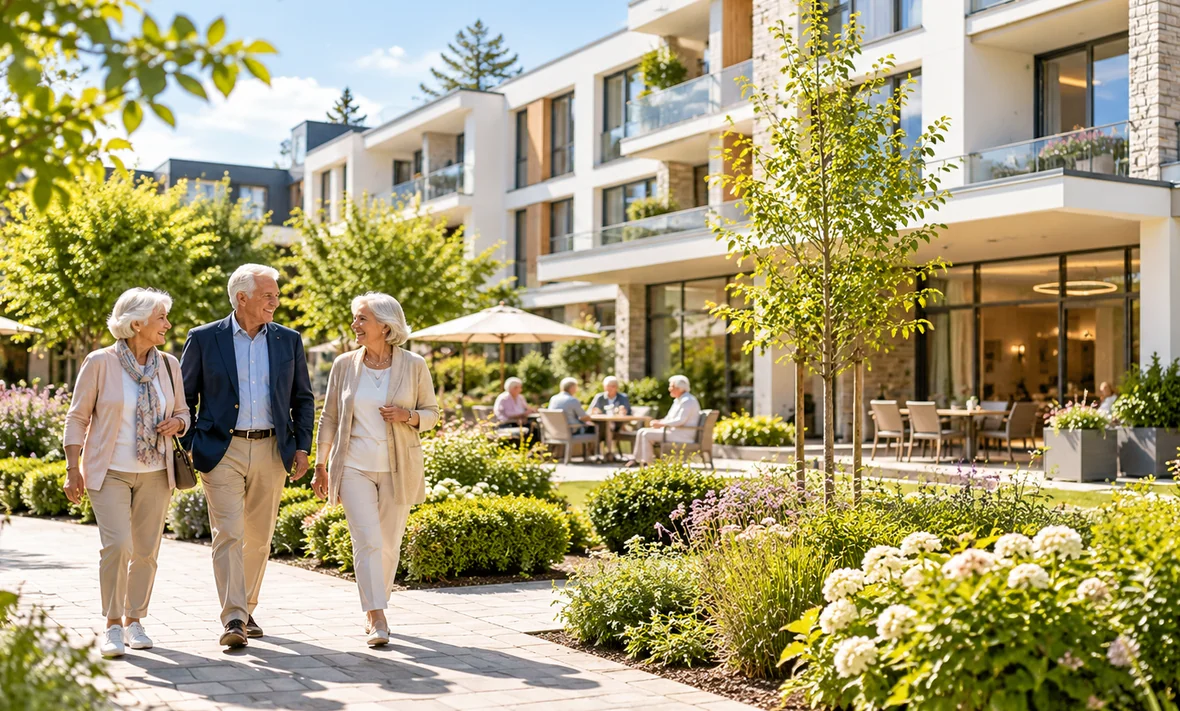
The spectrum of senior housing in India
At the upper end, developers and specialised operators build gated senior living communities with step-free apartments, dining halls, emergency response, clubhouses and tie-ups with nearby hospitals. Residents usually buy or lease a unit and pay a monthly service charge for maintenance and activities.
Assisted living and nursing care facilities are expanding in major cities, offering help with daily activities and medical monitoring. Alongside them, charitable and religious old-age homes, often called vridhashrams, have long served older people without family support, generally with simpler facilities and modest fees.
| Model | What residents receive | Points to check |
|---|---|---|
| Senior living community | Accessible homes, dining, activities, security | Purchase or lease terms, service charges |
| Assisted living | Personal care and nursing oversight | Staff ratios, doctor visits, hospital links |
| Old-age home | Room, meals and basic support | Hygiene, medical access, admission rules |
| Home care services | Nurses or attendants at home | Agency vetting and replacement guarantees |
Leading operators and the role of families
Specialised companies such as Columbia Pacific Communities run multiple senior living projects, and several property developers have launched dedicated retirement brands. Comparison guides aimed at non-resident Indians summarise locations, services and pricing, which helps families abroad shortlist options before visiting.
Family remains the backbone of elder care, and many communities are deliberately located near cities where children live or work. For people returning from the UK, the US or the Gulf, proximity to relatives, a trusted hospital and an airport usually outweighs scenery.
Who can settle in India for retirement
India has no general retirement visa for foreign nationals. People of Indian origin who hold foreign citizenship can usually obtain an Overseas Citizen of India card, which grants long-term multiple-entry stay, while Indian passport holders returning home need no immigration permission at all.
Foreigners without Indian ancestry face a much harder path, often depending on a spouse's status or other specific categories. Anyone in that situation should consult the Indian embassy or a qualified immigration lawyer, since tourist visas are not intended for permanent residence.
Healthcare and health insurance
Private hospital groups in Bengaluru, Chennai, Hyderabad, Pune, Delhi and Mumbai provide advanced treatment, and India is known for medical tourism. Public hospitals are inexpensive but crowded, so returning retirees generally rely on private care financed by insurance or savings.
Indian health insurance policies for older applicants may involve age limits, waiting periods for pre-existing conditions and co-payments. International expatriate policies offer broader cover at higher prices; whichever you choose, verify cashless treatment arrangements with hospitals near your intended community.
Climate, cities and living costs
South Indian cities such as Bengaluru and Coimbatore enjoy relatively moderate temperatures, which explains their popularity for senior living projects. Kerala and Goa appeal to people favouring coastal life, while hill stations like Dehradun attract those seeking cooler air, though monsoon rains affect most regions.
Domestic staff, fresh food and local transport remain affordable, while premium senior apartments in large cities can be priced close to international levels. Air quality, especially in northern cities during winter, is a genuine health consideration for older people with respiratory or cardiac conditions.
Reviewing a senior living agreement
Read the sale or lease agreement and the separate service agreement carefully. Clarify what happens if the resident dies or needs higher care, whether units can be resold or inherited, who sets future service charges and how disputes with the operator are resolved.
Check that the project has the necessary approvals and is registered with the state real estate regulator when applicable. Pensioners receiving a British State Pension should check whether it is uprated in India, and returning residents should seek advice on tax residence and foreign accounts.
Planning a return or move to India
Moving back after decades abroad involves practical and emotional adjustments, from reconnecting with family to reacquainting oneself with administration. A structured plan reduces stress and helps compare communities objectively rather than relying on brochures and promotional visits alone.
- Confirm your immigration status, such as an OCI card
- Choose a city based on family, hospitals and climate
- Visit several senior communities and talk with residents
- Secure health insurance accepting your age and history
- Have agreements reviewed by an independent lawyer
- Arrange banking, pension transfers and tax advice
Pitfalls to keep in mind
Families purchasing senior housing remotely sometimes discover problems only after moving in, notably regarding medical support, delayed construction or rising charges. The list below highlights issues that experienced residents and advisers mention most often when asked for warnings.
- Buying into projects lacking completion or regulatory approvals
- Assuming a community includes nursing care when it does not
- Ignoring escalation clauses in monthly maintenance fees
- Choosing a remote location far from emergency hospitals
- Relying on a tourist visa for long stays
Can a British or American citizen without Indian roots retire in India?
It is difficult. Without Indian ancestry or marriage to an Indian citizen, no standard long-term route exists for retirees. Extended stays on tourist visas are restricted, so careful consultation with Indian consular services is essential before making any housing commitment.
Which Indian cities have the most senior living communities?
Projects cluster around Bengaluru, Chennai, Coimbatore, Pune and the Delhi region, with additional developments in Kerala, Goa and northern hill towns. Concentration follows hospital availability, family networks and climate, making southern cities particularly well represented in the sector.
Do senior communities in India provide medical care?
Most independent living communities offer emergency response, doctor visits or a small clinic, and partnerships with nearby hospitals. Full nursing care is usually limited to dedicated assisted living or care wings, so verify precisely which services exist on site.
Is it better to buy or lease in a senior community?
Buying offers ownership and potential inheritance, but resale can be slow and restricted to eligible buyers. Leasing or deposit-based models preserve flexibility and capital. Compare total costs over ten years and the refund conditions before deciding.
Sources and organisations
- Belong – Senior living communities in India for NRIs — Selection of leading senior living communities in India welcoming non-resident Indians, with services, locations and pricing.
- Senior Housing News – Columbia Pacific senior living model in India — Article on Columbia Pacific Communities, one of India's leading senior living operators, and its scalable residence model.