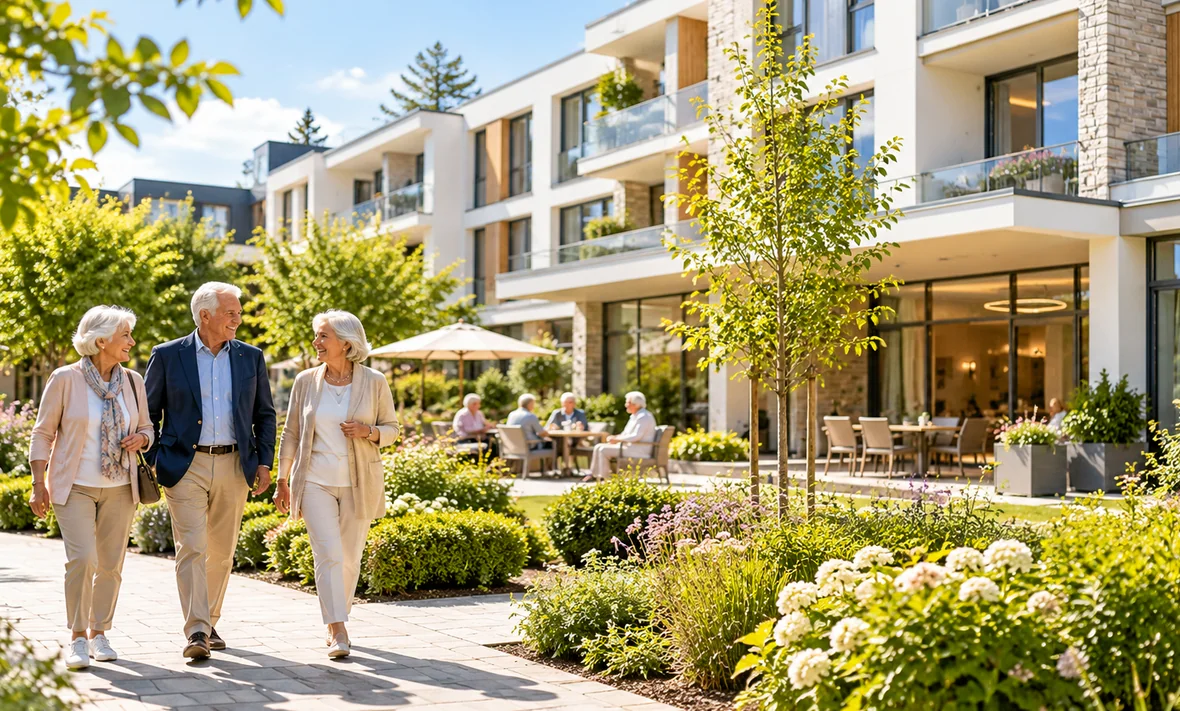
Senior care and housing in Vietnam
Traditionally, older Vietnamese live with their children, and filial duty remains a strong social value. Rapid ageing and urbanisation have nonetheless created demand for nursing homes, known as viện dưỡng lão, particularly in Hanoi and Ho Chi Minh City.
Private operators are developing assisted living and rehabilitation centres, some with medical teams and modern facilities. Most foreign retirees, however, live independently in rented apartments or houses and employ domestic helpers, a widely used and relatively affordable arrangement in Vietnamese cities.
Public, charitable and private providers
Public social protection centres mainly serve vulnerable older people without family support. Charitable and religious organisations run additional homes, while private companies and joint ventures target middle-class families and occasionally foreigners, offering higher comfort and more individual care.
Standards differ considerably, and regulation is still evolving as the sector grows. Ask for the operating licence, details of medical staff and links with hospitals, and visit several establishments before entrusting an older relative or yourself to any of them.
Options compared
The table below sets out the formats an older foreigner can realistically consider. Housing and support can be combined flexibly, and many retirees start with an apartment, then add home care or move to a private centre if their health declines.
| Option | Profile | Support | Point to verify |
|---|---|---|---|
| Serviced or rented apartment | Independent retirees | Cleaning, building services | Lease terms, flooding, noise |
| House with domestic helper | Retirees wanting daily help | Household tasks, some personal care | Agreement, trust, references |
| Private assisted living centre | Reduced autonomy | Personal care, rehabilitation | Licence, doctors, language |
| Nursing home | High dependency | Round-the-clock care | Hospital link, foreign admissions |
Visas and residence for older foreigners
Vietnam offers no retirement visa. Many retirees use the electronic visa, which allows stays of up to 90 days, and then leave and return. This approach requires regular travel and offers no guarantee for an indefinite stay in the country.
Longer residence cards are tied to specific grounds such as family links with a Vietnamese citizen, investment or work. Since rules are revised regularly, consult the official immigration portal or an experienced local adviser before committing to a long-term move.
Hospitals and health insurance
International and private hospitals in Hanoi, Ho Chi Minh City and Da Nang offer good standards and English-speaking staff, at prices well above public facilities. Public hospitals are often crowded, and communication can be difficult without Vietnamese language skills.
Foreign retirees should hold international health insurance covering inpatient care, outpatient visits and evacuation to Bangkok or Singapore for complex cases. Check age limits, exclusions and direct billing agreements with the hospitals closest to your intended home.
Costs and favoured destinations
Local food, transport and domestic help are inexpensive by Western standards, while imported goods, international schools and premium hospitals are costly. Apartments in expatriate districts command higher rents than housing in ordinary neighbourhoods, which nonetheless offer an authentic experience.
Da Nang and nearby Hoi An combine beaches with good infrastructure. Da Lat in the highlands enjoys a mild, spring-like climate, while Nha Trang attracts sea lovers. Hanoi has distinct seasons, and Ho Chi Minh City remains warm and humid all year.
Contract and property points
Foreigners cannot own land, but they may buy apartments in approved projects with ownership limited in time and subject to quotas. Seek independent legal advice before any purchase, and verify that the project is eligible for foreign buyers.
With an assisted living centre, request a bilingual contract detailing fees, medical services, rules on hospital transfers and conditions for leaving. Clarify whether the centre accepts foreign residents long term and how it communicates with family abroad.
Steps to settle in Vietnam
A progressive approach allows retirees to test daily life before making binding choices. The steps below summarise how most foreigners organise their stay, from visa planning to healthcare, housing and long-term support arrangements for later years.
- Apply for an e-visa through the official immigration portal.
- Explore two or three cities over several months before choosing.
- Buy international health insurance with evacuation cover.
- Check whether your pension can be paid to Vietnam and is uprated.
- Rent an apartment and register your address with local police as required.
- Identify hospitals, home care options and private centres near your base.
Pitfalls reported by retirees
Vietnam is appealing and affordable, but several recurring issues can catch foreigners unprepared. These typically concern immigration status, property rules, air quality and the gap between private and public healthcare standards outside the largest cities.
- Relying indefinitely on repeated visa runs.
- Buying property through a nominee arrangement.
- Ignoring air pollution in Hanoi when lungs or heart are fragile.
- Settling far from an international-standard hospital.
- Signing contracts only in Vietnamese without translation.
Is there a retirement visa in Vietnam?
No dedicated retirement visa currently exists. Retirees typically combine e-visas with periodic departures or obtain a residence card through family, investment or employment links. Check current requirements before departure, because immigration policies change and individual situations vary.
Do Vietnamese nursing homes accept foreigners?
Some private centres in large cities accept foreign residents, especially those with English-speaking staff and medical teams. Public social protection centres focus on Vietnamese citizens in difficulty, so foreigners should count on private solutions or care at home.
How much Vietnamese do I need?
In expatriate areas and private hospitals, English is often sufficient. Elsewhere, basic Vietnamese helps enormously with landlords, markets and helpers. Translation apps assist with simple exchanges but are less reliable for medical or legal conversations.
Is the climate suitable for older people?
It depends on the region. Heat and humidity in the south can be tiring, and typhoons affect central coastal areas during the rainy season. Many retirees prefer Da Lat for its cooler temperatures or split their time between cities.
Sources and organisations
- Vietnam Immigration Department – e-Visa portal — Official Vietnam Immigration Department e-visa portal, the usual first step for foreigners planning an extended stay in Vietnam.
- Viet Nam News – Retirement homes and ageing population — Viet Nam News article on the growth of retirement homes as Vietnam faces a rapidly ageing population.
- Vietnam Briefing – Senior care market: assisted living and retirement — Analysis of the Vietnamese senior care market covering assisted living, retirement homes and the main types of providers.