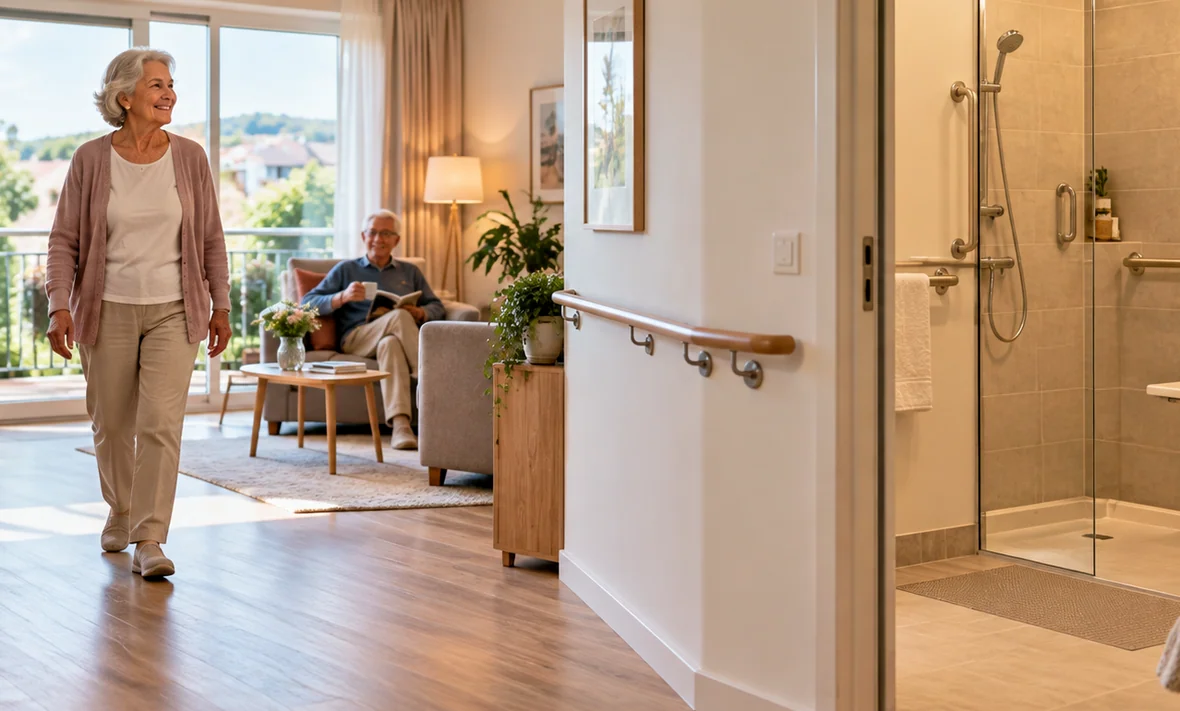
Senior housing options in Switzerland
Swiss senior housing ranges from ordinary flats adapted for older tenants to full nursing homes. Many municipalities support Alterswohnungen or logements protégés, age-friendly apartments with an alarm system and optional services, where residents keep a private tenancy while gaining reassurance and a sense of community.
Private Seniorenresidenzen or résidences pour seniors offer serviced apartments with restaurants, concierge services and sometimes an integrated care ward. At the other end, nursing homes, called Alters- und Pflegeheime in German-speaking cantons and EMS in French-speaking ones, provide permanent care for dependent residents.
Who runs these establishments
Care homes may be operated by municipalities, foundations, religious organisations or private companies, all under cantonal supervision. Because each canton regulates and partly finances long-term care, standards, waiting lists and admission procedures differ noticeably from Geneva to Zurich, Ticino or the Grisons.
Home care is organised by Spitex services, public or private, which send nurses and helpers to private homes and some senior apartments. Online directories such as Opancare list nursing homes by locality, helping families compare establishments before contacting them directly for availability.
Residence rules for foreign retirees
Citizens of EU and EFTA countries who no longer work can usually obtain residence if they show sufficient financial means and comprehensive health insurance. Since Brexit, UK nationals arriving now are no longer covered by free movement and follow rules for non-EU nationals instead.
Non-EU retirees, including Americans, Canadians and Australians, may apply for a permit reserved for financially independent people, granted at the canton's discretion. Conditions generally include a minimum age, personal ties with Switzerland and substantial means, so early contact with the cantonal migration office is advisable.
Health insurance and care funding
Basic health insurance is compulsory for residents and is purchased from private insurers, with premiums varying by canton and chosen deductible. Some pensioners receiving a pension from an EU country may be covered differently, so the cantonal authorities should confirm which system applies before arrival.
Nursing-home costs are split between the resident, health insurance and the canton or municipality. Accommodation and daily support remain largely the resident's responsibility. British readers should check whether their State Pension is uprated in Switzerland and how exchange-rate movements affect their budget.
Cost of living and popular regions
Rents, services and care are expensive by international standards, and prices are highest around Geneva, Lausanne and Zurich. Smaller towns and rural areas are generally more affordable, although availability of English-speaking staff and adapted housing may then be more limited.
Retirees often favour the Lake Geneva region for its mild climate and international atmosphere, Ticino for its Mediterranean feel and Italian language, and central Switzerland around Lucerne for lake scenery. Winters in the Alps can be harsh, which matters for anyone with reduced mobility.
Housing options compared
The table below gives a general overview of the main forms of senior housing in Switzerland. It does not replace individual quotes, as prices and services depend on the canton, the operator and the level of support required by each resident.
| Option | Typical operator | Care level | Cost level |
|---|---|---|---|
| Age-friendly apartment | Municipality or cooperative | Low, optional Spitex | Moderate |
| Private senior residence | Private company | Low to medium | High |
| Nursing home or EMS | Foundation, municipality, private | High, permanent | High, partly subsidised |
| Home with Spitex | Public or private Spitex | Flexible | Varies with hours |
Steps to move and choose a residence
Planning a move to Switzerland at retirement age takes time, because permits, insurance and housing depend on one another. Following a clear sequence prevents situations where a flat has been reserved but the residence permit or insurance cover is still missing.
- Clarify your permit category with the cantonal migration office.
- Prepare proof of income, assets and health insurance.
- Shortlist municipalities and visit residences in person.
- Compare contracts, service packages and care arrangements.
- Register with the municipality within the legal deadline after arrival.
Contract checks and pitfalls
Serviced residence contracts often combine a lease with a service agreement, each with its own notice period. Before signing, residents should verify what happens if they need nursing care, whether the residence has its own care ward and how fees are adjusted over time.
- Underestimating the monthly cost of health insurance premiums
- Assuming a residence guarantees a later nursing-home place
- Overlooking language differences between cantons
- Ignoring tax obligations linked to Swiss residence
- Signing a lease before the permit is confirmed in writing
Can a British pensioner retire to Switzerland?
Yes, but new arrivals since Brexit are treated as non-EU nationals, so the cantonal permit for financially independent people is the usual route. People already resident before the end of the transition period are protected by a separate citizens' rights agreement.
Which language is used in care homes?
Care homes operate in the local language, which is German, French, Italian or Romansh depending on the region. Staff in international areas sometimes speak English, but residents who do not master the local language should ask how communication will work daily.
Is long-term care fully covered by insurance?
No. Basic health insurance contributes to nursing care, but accommodation, meals and much personal support are charged to the resident. Some cantons offer additional public support for residents with limited means, subject to conditions that should be checked locally beforehand.
Are waiting lists common?
In many municipalities nursing homes and subsidised senior apartments have waiting lists, especially in cities. Registering early with several establishments, and staying in contact with the local information centre for older people, improves the likelihood of finding a suitable place when needed.
Sources and organisations
- Opancare – EMS / Pflegeheime — Swiss platform listing nursing homes by locality, useful for comparing residential care options for older people across cantons.