Main types of senior housing in Denmark
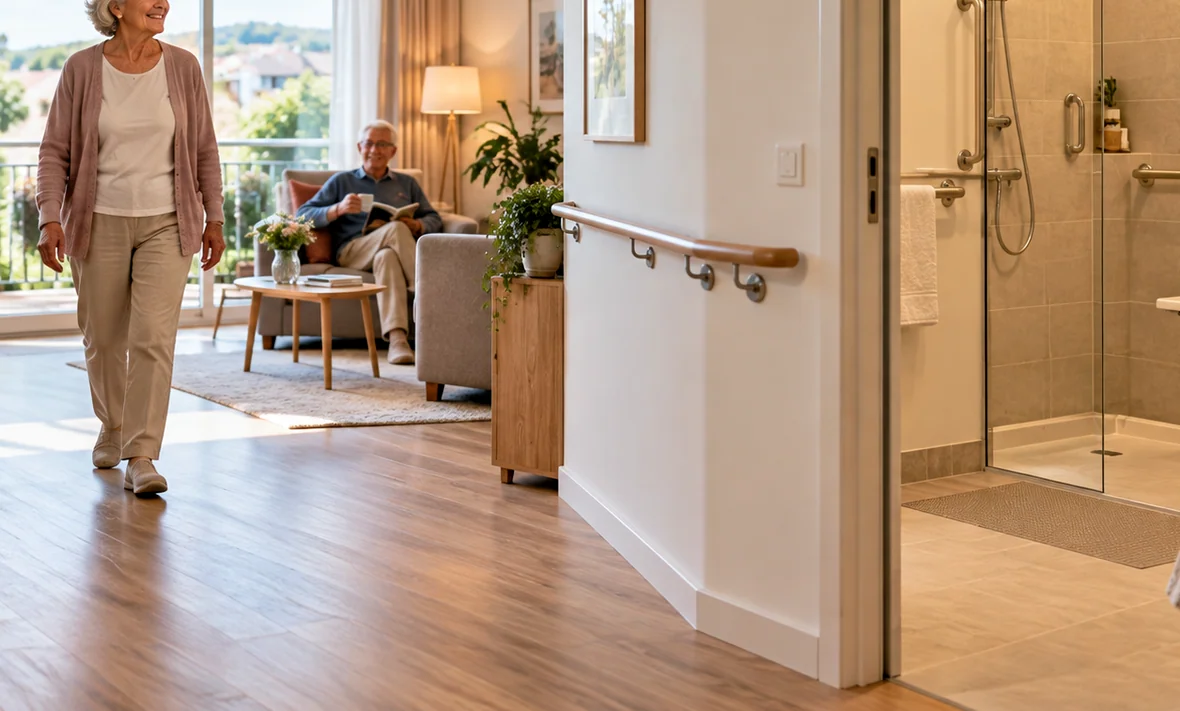
Danish policy stopped building traditional nursing homes decades ago and replaced them with self-contained flats. The plejebolig, or care dwelling, is today's nursing home: residents rent their own apartment with a kitchenette and bathroom, while staff provide care around the clock.
For people with lighter needs, the ældrebolig is an accessible rented apartment for older or disabled people, often with an alarm system. Senior cohousing, known as seniorbofællesskab, groups private homes around shared spaces, with residents cooking together and supporting each other informally.
Municipalities and other providers
The 98 municipalities are responsible for assessing care needs, providing home help and allocating care dwellings. Many care homes are municipal, but private and self-governing providers also operate, including friplejeboliger, independent care housing approved under a national scheme and chosen freely by residents.
Residents can, under certain conditions, choose a care home in another municipality, for example to live closer to children. The application is still made through the home municipality, which assesses the need for care before any transfer can be considered.
Who can settle in Denmark as a retiree?
EU and EEA citizens with sufficient resources can live in Denmark and register their residence. Denmark has no retirement visa for other nationalities, and residence normally requires family reunification or another legal basis, which is assessed under strict immigration rules.
Registration in the civil registration system provides a CPR number, which unlocks healthcare, banking and municipal services. Without this number, practical life becomes very difficult, so registration is a priority on arrival for anyone entitled to stay.
Healthcare and long-term care
Registered residents receive a health card and access to tax-funded public healthcare through a general practitioner, who refers patients to hospitals and specialists. Long-term care at home is also publicly organised. EU pensioners can register an S1 form from their pension country.
Some services carry personal charges, including dental care and part of medicine costs. Many residents buy supplementary insurance, frequently through a mutual health association, which reimburses part of these charges and is popular among older Danes.
Costs and financing
Rent in a care dwelling is paid by the resident, with housing benefit available to people on modest incomes. Care itself is financed by the municipality. Meals, laundry and cleaning packages may be charged separately, at prices set locally and published by each municipality.
The general cost of living in Denmark is high, particularly for food, eating out and cars. Retirees from abroad with pensions from lower-cost countries should prepare a realistic budget, including heating, which is often district heating billed through the building.
Regions and climate
Copenhagen and its suburbs offer the widest choice of services and international contacts. Aarhus and Odense combine university-city life with good hospitals, while island and coastal towns provide calm and nature. Winters are dark and grey, summers mild and bright.
Danish senior housing is closely tied to accessibility. Ældreboliger and care dwellings have step-free access, wide doors and adapted bathrooms, and municipalities can also fund aids and adaptations in an ordinary home, such as grab rails, ramps or a stairlift, after assessment.
Overview of options
| Option | Who it suits | Allocation | Key point |
|---|---|---|---|
| Own home with home help | Most older people | Municipal assessment | Free personal care after assessment |
| Ældrebolig | Reduced mobility | Municipal waiting list | Accessible rental flat |
| Plejebolig | Extensive care needs | Municipal allocation | Own flat, staff on site |
| Seniorbofællesskab | Active seniors | Private or cooperative | Shared activities, no care |
Senior cohousing projects are usually developed by cooperatives, housing associations or private investors. Some are owner-occupied, others rented through non-profit housing organisations. Each community sets its own expectations for shared meals, committees and maintenance work.
How to access senior housing
- Secure a legal right of residence and register for a CPR number.
- Register with a general practitioner.
- Contact the municipality to request a needs assessment.
- Visit care dwellings and ask to be placed on preferred waiting lists.
- Apply for housing benefit if income is limited.
Danish pensioners moving in from abroad, or foreigners who worked in Denmark, should check how residence periods affect entitlement to the national old-age pension. The pension authority can confirm entitlement, and early contact avoids surprises after settling.
Pitfalls and contract checks
A care dwelling is rented under a tenancy agreement, and a deposit and notice rules apply. Read the lease carefully, check what service packages cost and how prices are adjusted, and keep in mind that furniture is generally brought by the resident.
- Moving without a clear right of residence.
- Assuming cohousing provides care: it does not.
- Underestimating language barriers in municipal correspondence.
- Forgetting to check whether a foreign state pension is uprated in Denmark.
Is home help free in Denmark?
Personal care granted after a municipal assessment is free of charge for permanent help. Some practical help may involve a charge for temporary services. Rules differ slightly between municipalities, so residents should read local quality standards.
Can a foreigner join senior cohousing?
Yes, if they live legally in Denmark and can buy or rent a unit. Many communities hold waiting lists and introduction meetings. Daily life is mainly in Danish, so willingness to learn the language strongly improves integration.
How long is the wait for a care dwelling?
Municipalities must offer a place within a legally set period after approval, but a specific preferred home may take considerably longer. Ældre Sagen's comparison tool helps families understand differences between municipalities in care levels and services.
Is Danish needed for services?
Most Danes speak English well, but official letters and care plans arrive in Danish via digital post. Families often help translate letters and explain decisions. Learning basic Danish improves contact with care staff and neighbours considerably.
Sources and organisations
- Ældre Sagen – Plejeoverblikket — Comparison tool from Denmark's largest senior citizens' association showing home care and nursing home data by municipality.