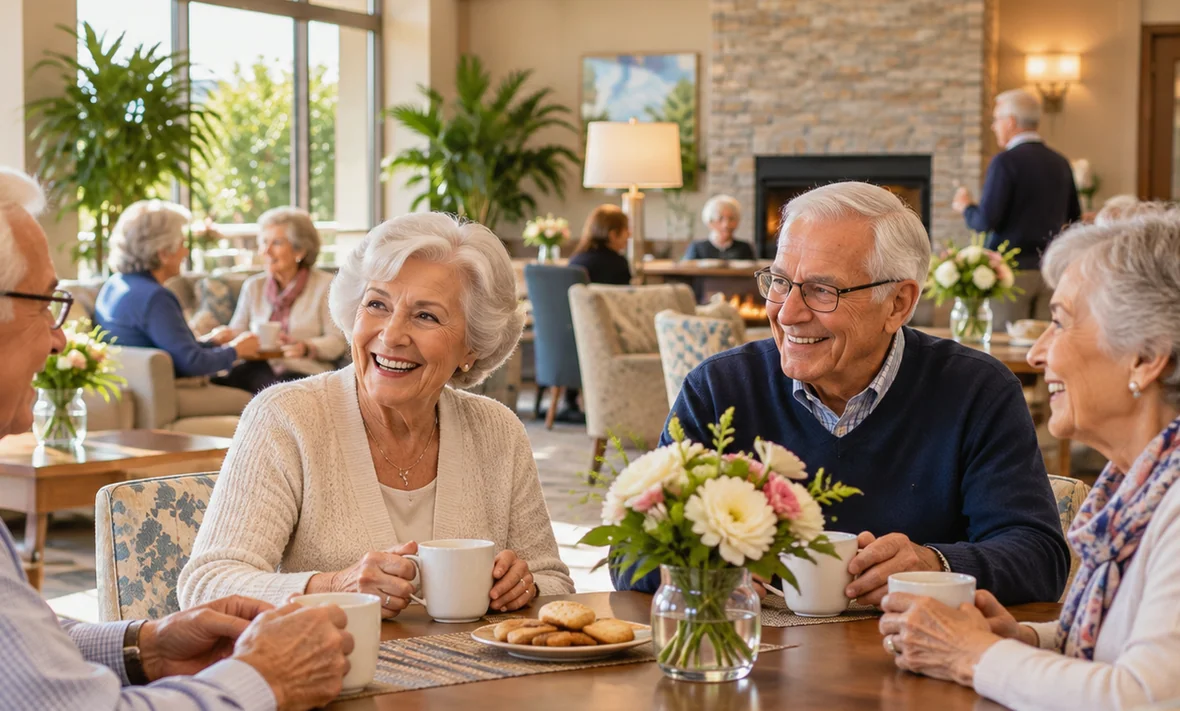
The Algerian approach to elderly care
Caring for older relatives at home is a strong social and religious expectation in Algeria. Placing a parent in an institution is still viewed by many families as a last resort, which explains why the residential sector is small compared with European countries.
The state runs homes for older people under the Ministry of National Solidarity, mainly for those who have no family able to support them. These establishments provide accommodation, meals and basic supervision, but they are not designed as retirement residences for independent, comfortably off retirees.
Housing options compared
Families organising care from abroad usually weigh several arrangements at once. The table summarises the main possibilities, from staying in the family home with paid help to private facilities that have emerged in large cities over recent years.
| Arrangement | Typical profile | Points to watch |
|---|---|---|
| Family home with relatives | Independent or mildly dependent parent | Burden on the relative who lives closest |
| Family home with paid carer | Parent needing daily help | Vetting, supervision and informal contracts |
| Private care facility | Higher dependency, urban families | Few places, licensing and staffing levels |
| Public home for older people | No family support available | Admission priorities and limited comfort |
| Adapted flat near relatives | Retiree returning from abroad | Lifts, access and distance to hospitals |
Who runs services for older people
Besides the solidarity ministry and its local directorates, associations and charitable groups support isolated older people, sometimes with home visits. Private nursing and home-help services operate mostly in Algiers, Oran and Constantine. Quality varies, so personal recommendations and visits are essential before any agreement.
Doctors who make home visits, physiotherapists and nurses employed privately often complete this picture. Families abroad frequently rely on a trusted local relative or neighbour to coordinate these professionals, check attendance and report any change in the parent's condition promptly.
Entry and residence for returning retirees
Algerian nationals, including dual nationals, can return and live in the country with their Algerian documents. Foreign spouses and non-Algerian retirees generally need a visa and then a residence card. Requirements change, so the nearest Algerian consulate should confirm the current procedure in writing.
Healthcare and insurance in practice
Public hospitals provide care at low cost, and the national social security fund covers registered contributors and pensioners. Many families nevertheless pay for private clinics for faster appointments or specialist treatment. Medicines may occasionally be in short supply, so continuity of prescriptions deserves attention.
Retirees returning from the United Kingdom or Canada should not assume their home insurance travels with them. Ask whether your State Pension is uprated in Algeria, and compare international health insurance policies, paying attention to age limits and exclusions for existing conditions.
Costs and budgeting from abroad
Living costs are generally lower than in Western Europe, though imported goods and private healthcare can be expensive. Exchange controls and transfer procedures affect how money sent from abroad is received, so discuss regular transfers with both your own bank and an Algerian one.
Cities and regions with the best services
Algiers, Oran, Constantine and Annaba concentrate hospitals, pharmacies and private clinics. Coastal towns such as Béjaïa and Tipaza offer a milder climate, while the high plateaux and the south bring hotter summers and colder nights. Proximity to specialist care should guide the choice.
Contract and quality checks
Whether hiring a carer or choosing a private facility, ask to see authorisations, written terms and a clear list of included services. Check staffing at night, meal arrangements, medical follow-up and visiting rules. Agree on how relatives abroad will receive updates and pay invoices.
- Agreeing care arrangements only verbally, with no written duties or notice period
- Assuming a private facility is licensed without asking for proof
- Leaving one sibling to carry all responsibilities without a shared plan
- Overlooking power of attorney or banking access for the parent
- Forgetting to check pension payment rules for residents in Algeria
Organising care step by step
Distance makes planning harder, but a structured method helps families agree on roles. The steps below assume a parent already living in Algeria, although most also apply to a retiree who intends to return after decades spent in Britain or North America.
- Assess the parent's health and daily needs with a doctor
- Hold a family discussion on who visits, who pays and who decides
- Adapt the home: grab bars, ground-floor bedroom, good lighting
- Recruit and vet a carer, or visit private facilities in person
- Put written agreements and a payment schedule in place
- Review the arrangement every few months and adjust it
Are there private retirement homes in Algeria?
A limited number of private facilities have opened in the main cities, responding to changing family structures and emigration. Their standards, prices and medical staffing differ considerably, so families should visit several times, speak to residents and request written terms before deciding.
Can a parent be admitted to a public home?
Public homes primarily accept older people without family able to care for them, and admission follows an assessment by social services. A parent whose children live abroad is not automatically eligible. Local solidarity directorates explain the criteria and the documents they require.
Is home care the most common solution?
Yes. Most older Algerians live with or near relatives, often supported by a hired helper for cleaning, cooking or personal care. This arrangement keeps the parent in familiar surroundings, but it needs clear agreements and regular oversight when the organising children live overseas.
What should returning retirees prepare?
Before moving back, gather pension statements, medical records and prescriptions, and check how your pension will be paid. Plan accommodation with step-free access and a nearby clinic. Discuss inheritance and property paperwork early, since these questions often become complicated within extended families.
Sources and organisations
- TSA – Foyers d'accueil et famille : le modèle algérien — TSA analysis of elderly care in Algeria, balancing public homes for older people with the central role of family support.
- Zoom Algérie – Maison de retraite en Algérie : guide diaspora — Practical guide to retirement homes in Algeria covering prices, admission conditions and alternatives for diaspora families caring for parents.