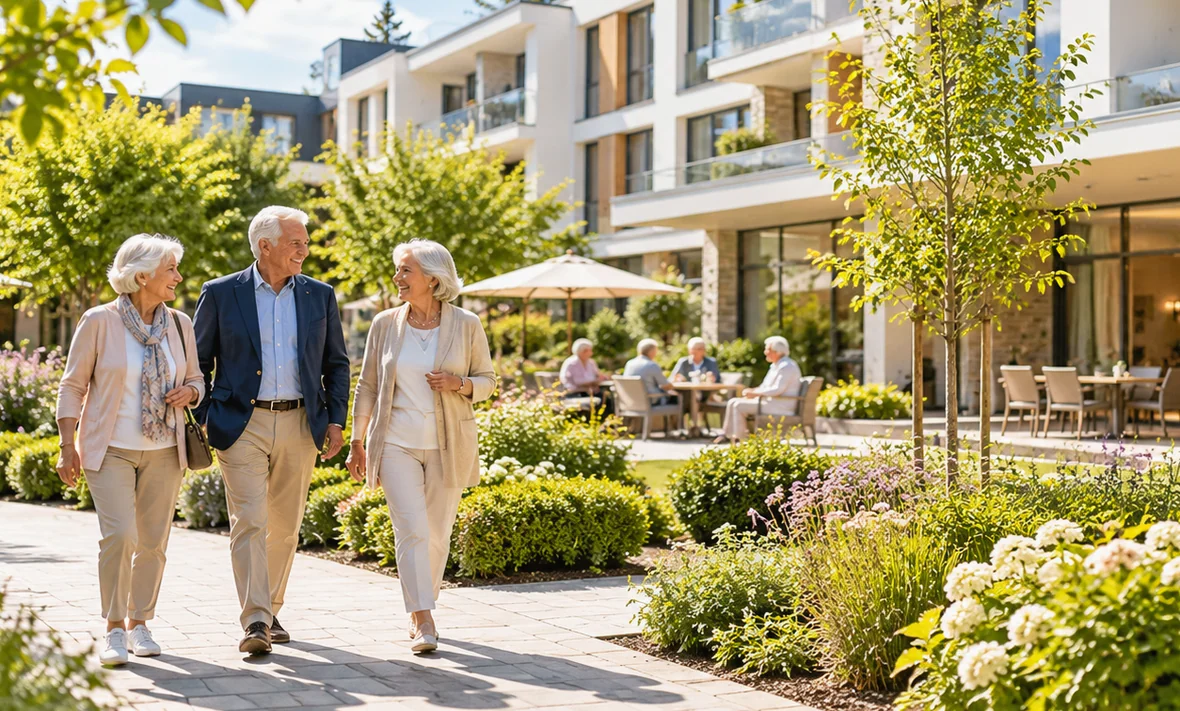
Japan's main forms of senior housing
Paid nursing homes, called yūryō rōjin hōmu, are private facilities ranging from homes for independent residents to those offering full nursing care. Serviced housing for older people, known as sakōjū, provides barrier-free rental flats with safety checks and consultation services.
Special nursing homes for the elderly, tokuyō, are publicly subsidised and reserved mainly for people with high assessed care needs, often with waiting lists. Group homes for people with dementia offer small family-style units where residents share daily tasks under staff supervision.
| Type | Level of support | Access |
|---|---|---|
| Serviced housing (sakōjū) | Safety checks and advice, external care as needed | Rental contract, often for independent people |
| Paid nursing home | From lifestyle services to full nursing care | Private contract, entry fees possible |
| Special nursing home (tokuyō) | Intensive long-term care | Public, prioritised by care level |
| Dementia group home | Small-scale support for dementia | Local residency and diagnosis usually required |
Operators and official information
Japanese senior housing is run by private companies, social welfare corporations, medical corporations and municipalities. Large operators, including insurance-linked groups, manage hundreds of facilities, while many smaller homes are independently operated and deeply rooted in their local community.
The Ministry of Health, Labour and Welfare maintains a public information system listing long-term care services and facilities nationwide, with details on staffing and services. It is mainly in Japanese, so foreign families often need a bilingual helper to search and compare entries.
Can a foreign retiree live in Japan?
Japan has no general retirement visa. Foreigners usually reside through work, family ties such as marriage to a Japanese national, or permanent residence acquired over time. Spouses and long-term residents may continue living in Japan after retiring if their status remains valid.
A designated activities status allows certain wealthy foreigners to stay for an extended sightseeing and leisure period, subject to strict financial and insurance conditions and time limits. It does not constitute a path to settlement, so consult the immigration services agency before planning a move.
Health insurance and long-term care insurance
Residents registered in Japan for more than three months generally join either employee health insurance or National Health Insurance. Patients pay a share of medical costs, with reduced rates for older age groups and monthly caps limiting very high expenses.
Long-term care insurance, kaigo hoken, covers residents aged forty and over. After an assessment determines the care level, the insured person can use home care, day services or facility care while paying a portion of costs. Foreign residents with valid status take part equally.
Regions, seasons and costs of senior living
Japan's climate ranges from snowy Hokkaido to subtropical Okinawa. Many foreign residents favour Tokyo, Yokohama, Kyoto, Osaka or Fukuoka for transport and medical access, while some appreciate rural towns with quieter lives but fewer English-speaking services.
Paid nursing homes may require substantial entrance fees in addition to monthly charges, while serviced housing typically works like a rental with deposits and service fees. Daily living costs depend heavily on the region, with Tokyo and central city areas significantly more expensive.
Reviewing contracts carefully
Paid nursing home contracts can include an entrance fee amortised over several years. Ask how much is refunded if the resident leaves or dies early, what care levels the home accepts and whether residents must move if their needs increase.
Confirm whether the home provides care directly or through external providers billed separately under long-term care insurance. Retirees with a British State Pension should check whether it is uprated in Japan, and anyone moving funds should compare bank charges for yen transfers.
How to choose and secure a place
Families arranging care for a foreign resident in Japan benefit from early contact with the municipal office and a care manager. The care manager coordinates assessments and suggests services, while visits to several homes allow comparison of atmosphere, food and staff.
- Confirm the resident's immigration status and its renewal
- Register for National Health Insurance and care insurance
- Apply for a care level assessment at the municipal office
- Work with a care manager to define services
- Visit homes and compare entrance fees and monthly costs
- Review the contract with a bilingual adviser
Pitfalls for foreigners
Most difficulties encountered by foreign residents in Japan's care system relate to language, contract terms and immigration status rather than quality. The points listed below explain where families from abroad most often encounter unexpected problems when organising care.
- Assuming a retirement visa exists for foreigners
- Signing for entrance fees without checking refund rules
- Choosing homes without bilingual staff or interpreters
- Missing municipal registration and insurance enrolment
- Underestimating waiting lists for public nursing homes
Does Japanese long-term care insurance cover foreigners?
Foreign nationals residing legally in Japan with registered addresses generally participate in long-term care insurance from age forty. Once assessed, they can use covered services on the same basis as Japanese residents, paying their share according to income.
Are there English-speaking care homes in Japan?
English-speaking care homes are rare. Some facilities in Tokyo and other major cities have staff speaking English or other languages, and international communities occasionally help members find suitable homes, but most services operate exclusively in Japanese.
What is a sakōjū?
A sakōjū is serviced housing for older people, featuring barrier-free design, safety monitoring and life consultation. Residents sign rental agreements and arrange care separately when needed, making it suitable for relatively independent people who still value the reassurance of on-site support.
Can I enter Japan as a retiree and apply for residence later?
Entering as a tourist and then converting to long-term residence is generally not possible without qualifying grounds such as family ties or employment. Prospective residents should clarify eligibility with the Japanese embassy before any housing commitment.
Sources and organisations
- MHLW – Système de publication des services de soins (Kaigo Kensaku) — Official Japanese Health Ministry search system listing long-term care facilities and elderly care services nationwide.