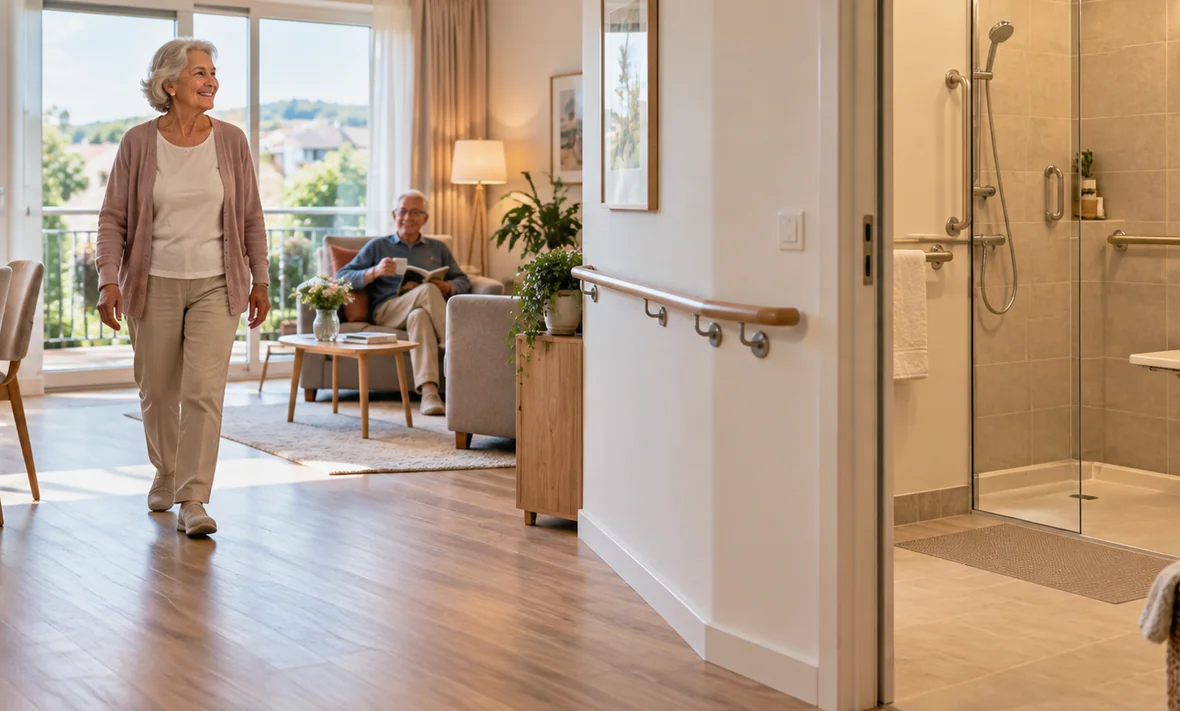
Housing and care options for older people
Most older people in Ireland live in their own homes, supported when necessary by state-funded home support services. Sheltered housing, provided by local authorities and approved housing bodies, offers small independent units with a warden or support worker and shared social spaces.
Nursing homes provide long-term residential care and are operated by the Health Service Executive, private companies and voluntary organisations. Housing with supports, a newer model promoted by charities such as ALONE, aims to fill the gap between living alone and entering full residential care.
| Option | Who provides it | Typical resident |
|---|---|---|
| Home support at home | HSE and approved providers | Person wishing to stay in their own house |
| Sheltered housing | Local authorities, approved housing bodies | Independent older person wanting company and security |
| Housing with supports | Voluntary bodies and councils | Someone needing some daily assistance |
| Nursing home | HSE, private and voluntary operators | Person requiring continuous nursing care |
Regulation, inspection and the Fair Deal
All nursing homes must be registered with HIQA, the Health Information and Quality Authority, which inspects them and publishes reports. Reading recent inspection reports is one of the best ways to compare homes on staffing, safety, resident rights and quality of daily life.
The Nursing Homes Support Scheme, widely known as Fair Deal, helps residents pay for care: the person contributes a proportion of income and assets, and the state pays the balance. The national consumer protection commission publishes clear guidance on contracts, costs and residents' rights.
Who can move to Ireland in retirement
British citizens may live in Ireland under the Common Travel Area arrangements, and EU and EEA citizens enjoy freedom of movement. Retirees from the United States, Canada, Australia and other countries generally apply for permission as persons of independent means, known as Stamp 0.
That permission requires proof of sufficient income and private health insurance, and it does not allow employment. Stamp 0 is renewable but does not automatically lead to long-term residence, so applicants should study the immigration service's current guidance before selling property abroad.
Public healthcare and private insurance
The Health Service Executive provides public healthcare, with access depending on residence and, for some services, on medical card or GP visit card eligibility. Many residents also hold private health insurance to shorten waiting times for elective procedures and specialist appointments.
Pensioners from other EU countries, and many British State Pension recipients, can use an S1 form to access public services. Non-EU retirees on Stamp 0 must maintain private cover; insurers in Ireland operate community rating, which limits pricing differences based on age.
Regions, weather and the cost of living
Ireland's climate is mild and damp, with few extremes, though grey skies and frequent rain affect some newcomers. Dublin offers hospitals and culture, while counties such as Cork, Kerry, Galway, Clare and Wexford attract retirees seeking coast, countryside and smaller towns.
Housing costs and rents are high, especially in Dublin and other cities, and availability of rental properties can be tight. Groceries and energy are also relatively expensive. Rural living offers space and scenery but often requires a car and longer journeys to hospitals.
Points to check in a nursing home contract
Every nursing home should provide a written contract of care. Check the weekly fee, what Fair Deal covers, and any additional charges for social programmes, hairdressing or therapies. Ask how fees will change and what notice is required to leave.
Confirm the home's latest HIQA report, staffing levels at night and the process for raising complaints. For finances, check whether your foreign pension is uprated in Ireland; British State Pensions should be confirmed with the International Pension Centre.
Steps to choose and settle
Moving to Ireland or choosing care for a relative works best when residence, healthcare and housing are approached in order. Early contact with the local HSE office clarifies eligibility for home support and the documents needed for any Fair Deal application.
- Confirm your residence basis: Common Travel Area, EU or Stamp 0
- Arrange private health insurance or register an S1 form
- Decide between home support, sheltered housing or nursing care
- Read HIQA inspection reports and visit several homes
- Apply for Fair Deal through the HSE if eligible
- Review the contract of care before admission
Pitfalls to avoid
Families arranging care in Ireland sometimes face unexpected costs or delays, especially when moving from abroad. The issues listed here appear frequently in consumer guidance and advice from older people's organisations, and they deserve attention before any decision is finalised.
- Assuming Fair Deal covers every charge in a nursing home
- Applying for Fair Deal without being ordinarily resident
- Overlooking HIQA reports when comparing homes
- Underestimating rental shortages in popular counties
- Arriving on Stamp 0 without adequate private health cover
Can a returning emigrant access Fair Deal immediately?
Fair Deal is available to people ordinarily resident in Ireland who need long-term nursing home care. Returning emigrants should clarify with the HSE how ordinary residence is assessed in their case, as recent arrivals may need to demonstrate settled intentions.
Are private nursing homes in Ireland covered by Fair Deal?
Yes, the scheme applies to approved private and voluntary nursing homes as well as public ones. However, homes may levy additional charges for services outside the scheme, so a careful reading of the contract of care is essential.
How do I check the quality of an Irish nursing home?
HIQA publishes inspection reports for every registered nursing home, covering governance, staffing, safeguarding and residents' wellbeing. Combining these reports with unannounced visits and conversations with residents' families provides a well-rounded view of a home's quality.
Is the UK State Pension uprated in Ireland?
Ireland is within the European Economic Area, where British State Pensions have normally been uprated. Retirees should still confirm their individual position with the International Pension Centre and ensure that payment details are updated after moving.
Sources and organisations
- CCPC – Moving into a nursing home — Official Irish guide to moving into a nursing home: contracts, costs, the Fair Deal scheme and consumer rights.
- ALONE – Housing with supports — Irish charity for older people promoting housing with supports as a practical alternative to moving into nursing home care.